eBook How Do DORA and GDPR Compare?
Understand the Key Differences Between Two Essential European Regulations
Organizations operating in or serving the European market must navigate an increasingly complex regulatory landscape. Two of the most significant frameworks are the Digital Operational Resilience Act (DORA) and the General Data Protection Regulation (GDPR). While both aim to improve security and protect organizations and individuals, they address different risks, impose different obligations, and require distinct compliance strategies.
This eBook provides a practical comparison of DORA and GDPR, helping IT managers, cybersecurity professionals, compliance officers, auditors, and business leaders understand where these regulations overlap and where they differ.
Whether your organization is a financial institution, technology provider, managed service provider, or any business handling personal data, understanding the relationship between DORA and GDPR is essential for maintaining compliance and strengthening cyber resilience.
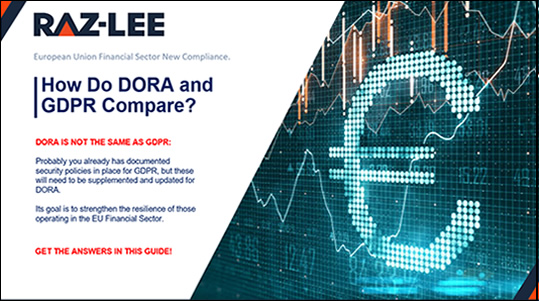
Probably you already have documented security policies in place for GDPR, but these need to be supplemented and updated for DORA.
Download This eBook
What You’ll Learn
Inside this guide, you’ll discover:
The objectives and scope of DORA and GDPR.
Which organizations are affected by each regulation.
The primary compliance requirements and security obligations.
How operational resilience differs from data privacy.
Reporting requirements for cyber incidents and data breaches.
Third-party and supply chain risk management expectations.
Governance, risk assessment, and documentation best practices.
How DORA and GDPR complement each other within a comprehensive cybersecurity strategy.
Practical recommendations for organizations using IBM i environments.
Why This eBook Matters
Many organizations mistakenly assume that complying with GDPR automatically satisfies DORA requirements. In reality, the two regulations address different aspects of cybersecurity and risk management.
GDPR focuses on protecting personal data and individual privacy rights, while DORA establishes a comprehensive framework to ensure that financial entities can prevent, withstand, respond to, and recover from ICT disruptions and cyberattacks. Understanding both regulations enables organizations to build stronger security programs, reduce regulatory risk, and improve operational resilience.
For IBM i environments, implementing robust auditing, access control, file integrity monitoring, ransomware protection, privileged user management, encryption, and continuous security monitoring can significantly simplify compliance efforts under both regulatory frameworks.