eBook How to be SOX Compliant
A Practical Guide to Strengthening Internal Controls and Achieving SOX Compliance
Publicly traded companies are required to maintain strong internal controls over financial reporting to comply with the Sarbanes-Oxley Act (SOX). Effective governance, accountability, and cybersecurity are essential components of a successful SOX compliance strategy, helping organizations reduce risk, improve transparency, and protect the integrity of financial information.
This practical eBook explains the key requirements of SOX and provides actionable guidance for implementing the security controls, monitoring capabilities, and auditing processes necessary to support compliance.
Whether you’re an IT manager, security administrator, compliance officer, auditor, internal controls specialist, or business executive, this guide will help you understand the technical and operational measures that contribute to a successful SOX compliance program.
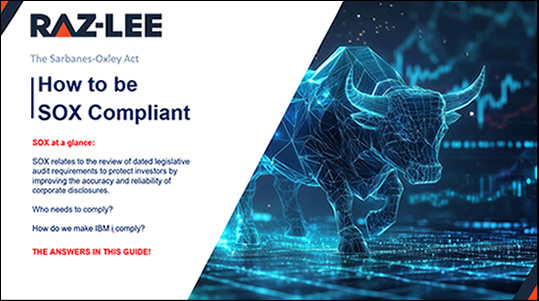
SOX relates to the review of dated legislative audit requirements to protect investors by improving the accuracy and reliability of corporate disclosures.
Download This eBook
What You’ll Learn
Inside this eBook, you’ll discover:
An overview of the Sarbanes-Oxley Act (SOX) and its objectives.
Which organizations are required to comply with SOX.
The importance of internal controls over financial reporting (ICFR).
User access management and segregation of duties best practices.
Audit trails, activity monitoring, and log management.
Change management and file integrity monitoring.
Protecting sensitive financial data through encryption and access controls.
Risk assessment, documentation, and compliance reporting.
How IBM i security controls can help support SOX compliance.
Practical recommendations for maintaining continuous compliance.
Why This eBook Matters
SOX compliance extends beyond financial processes—it requires organizations to demonstrate that effective IT controls protect the systems and data supporting financial reporting. Without adequate security, unauthorized access, configuration changes, or insufficient monitoring can compromise the integrity of financial information and increase audit findings.
Organizations can strengthen their compliance posture by implementing comprehensive audit logging, privileged access management, multi-factor authentication, file integrity monitoring, encryption, security monitoring, and automated alerting. These controls improve visibility, reduce operational risk, and provide the evidence auditors require to verify compliance.
For organizations running mission-critical financial applications on IBM i, native security solutions help simplify compliance by delivering centralized monitoring, detailed auditing, automated reporting, and proactive protection against internal and external threats.