
eBook What is File Integrity Monitoring (FIM)?
A Practical Guide to Protecting Critical Files, Detecting Unauthorized Changes, and Strengthening Compliance
Every organization relies on the integrity of its systems, applications, and critical data. Unauthorized or unexpected changes to files, system configurations, or application objects can indicate cyberattacks, insider threats, malware, ransomware, or configuration errors. File Integrity Monitoring (FIM) provides continuous visibility into these changes, enabling organizations to detect suspicious activity before it becomes a serious security incident.
This practical eBook explains how File Integrity Monitoring works, why it is a critical component of a modern cybersecurity strategy, and how organizations can use it to improve security, simplify compliance, and protect business-critical IBM i environments.
Whether you’re an IT manager, cybersecurity professional, compliance officer, auditor, system administrator, or IBM i specialist, this guide will help you understand the value of continuous file monitoring and change detection
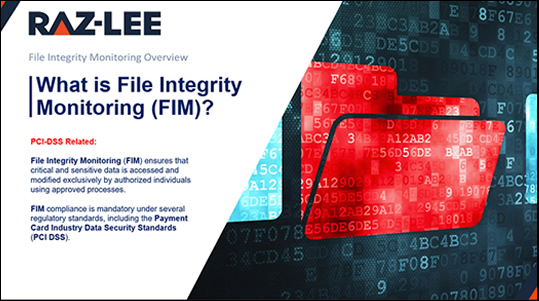
File Integrity Monitoring (FIM) ensures that critical and sensitive data is accessed and modified exclusively by authorized individuals using approved processes.
Download This eBook
What You’ll Learn
Inside this eBook, you’ll discover:
What File Integrity Monitoring (FIM) is and how it works.
Why monitoring file and object changes is essential for cybersecurity.
The difference between baseline validation and real-time monitoring.
How FIM helps detect unauthorized modifications, ransomware activity, and insider threats.
Best practices for monitoring critical files, directories, system objects, and configuration settings.
How FIM supports compliance with PCI DSS, SOX, HIPAA, GDPR, NIS2, DORA, and other security frameworks.
Integrating FIM with security monitoring, auditing, and incident response processes.
Practical recommendations for implementing File Integrity Monitoring on IBM i.
Common deployment challenges and proven best practices.
Why This eBook Matters
Modern cyberattacks often begin with unauthorized changes to files, system objects, applications, or security configurations. Without continuous monitoring, these changes may remain undetected until they disrupt operations, compromise sensitive information, or lead to regulatory violations.
File Integrity Monitoring provides organizations with continuous visibility into critical assets, allowing security teams to detect unexpected changes, investigate suspicious activity, and respond quickly to potential threats. When combined with auditing, privileged access management, multi-factor authentication, encryption, and real-time alerting, FIM becomes a powerful component of a comprehensive cybersecurity strategy.
For IBM i environments, native File Integrity Monitoring solutions help protect the Integrated File System (IFS), application libraries, configuration objects, and other critical resources while providing detailed audit trails and automated alerts that simplify compliance and strengthen operational security.